

Trials focus on varieties, weeds and disease management


Advertising promotion
YP AG’S 21st annual Farmer Technology Day drew an impressive turnout on Wednesday, September 2.
Fortunately, unlike the previous day, the weather was mild, with only a slight breeze and occasional glimpses of sunshine peeping through the clouds.
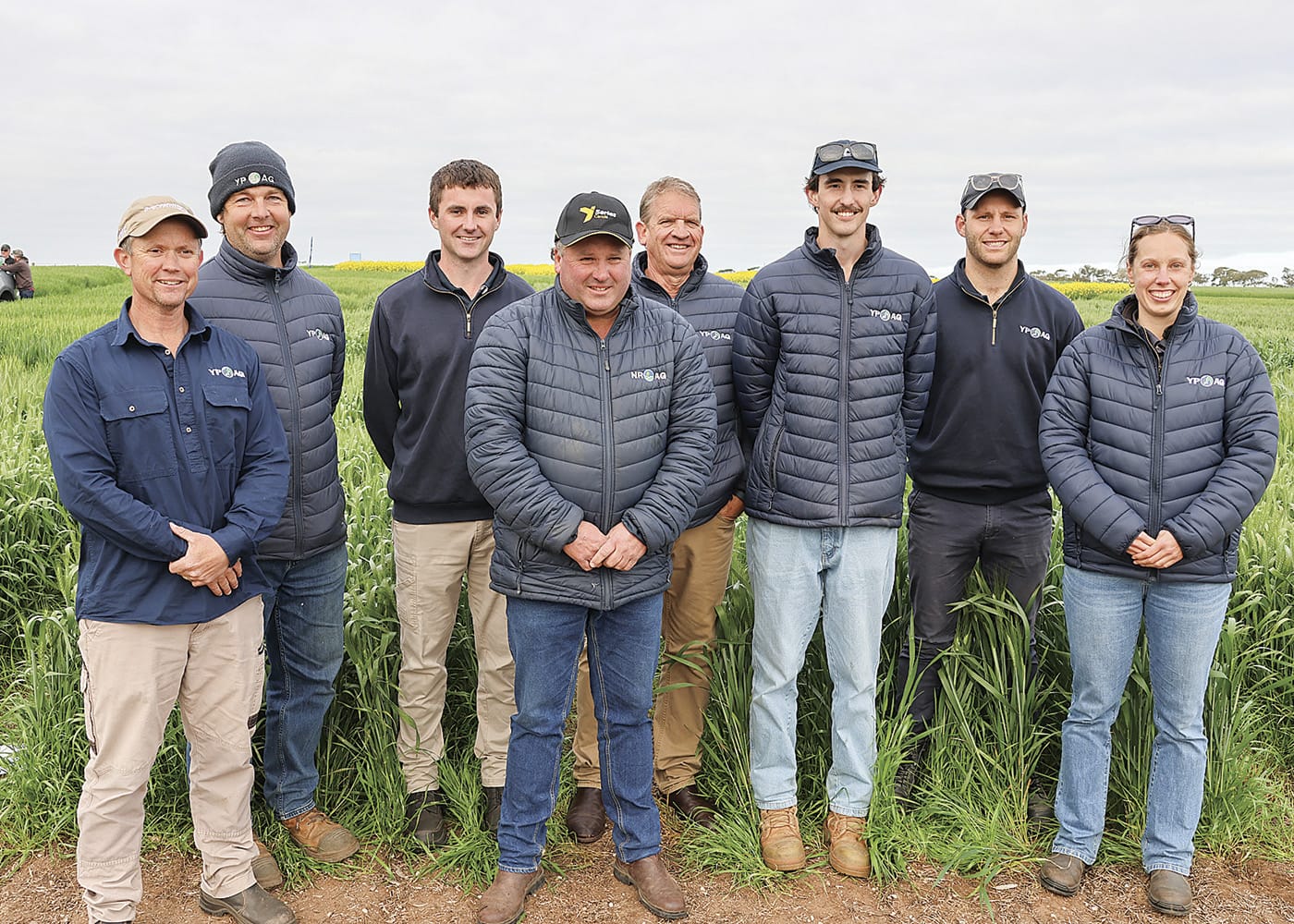
YP AG research agronomist Elliott Goody welcomed the audience and thanked co-operator the Edwards family, who kindly hosted the morning’s trial sites on their property, Gulfvue, south of Port Broughton.
He also thanked the rest of the research and development team for helping put together an array of feature-packed trials and for helping to keep the sites looking clean and presentable.
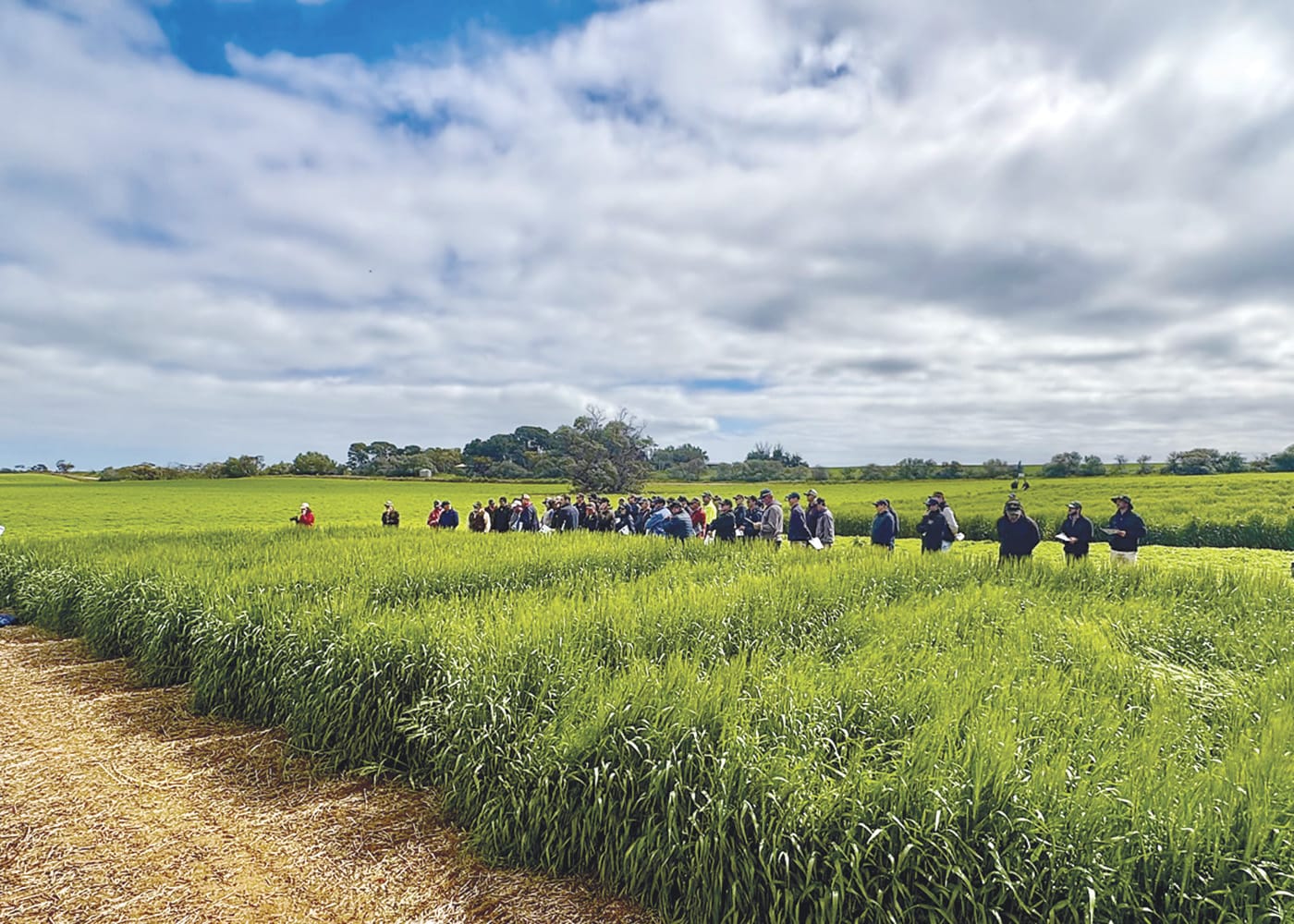
The trials in this year’s lineup explored topics including nitrogen management in barley; economic comparisons between durum and bread wheat; net form net blotch management in barley; capeweed control in lentils; a knockdown matrix; annual ryegrass control in lentils and canola; lentil disease management across different rainfall zones; and the latest advancements in lentil genetics.
That is not to mention the other trials at various locations that could not be included in the day’s sessions.
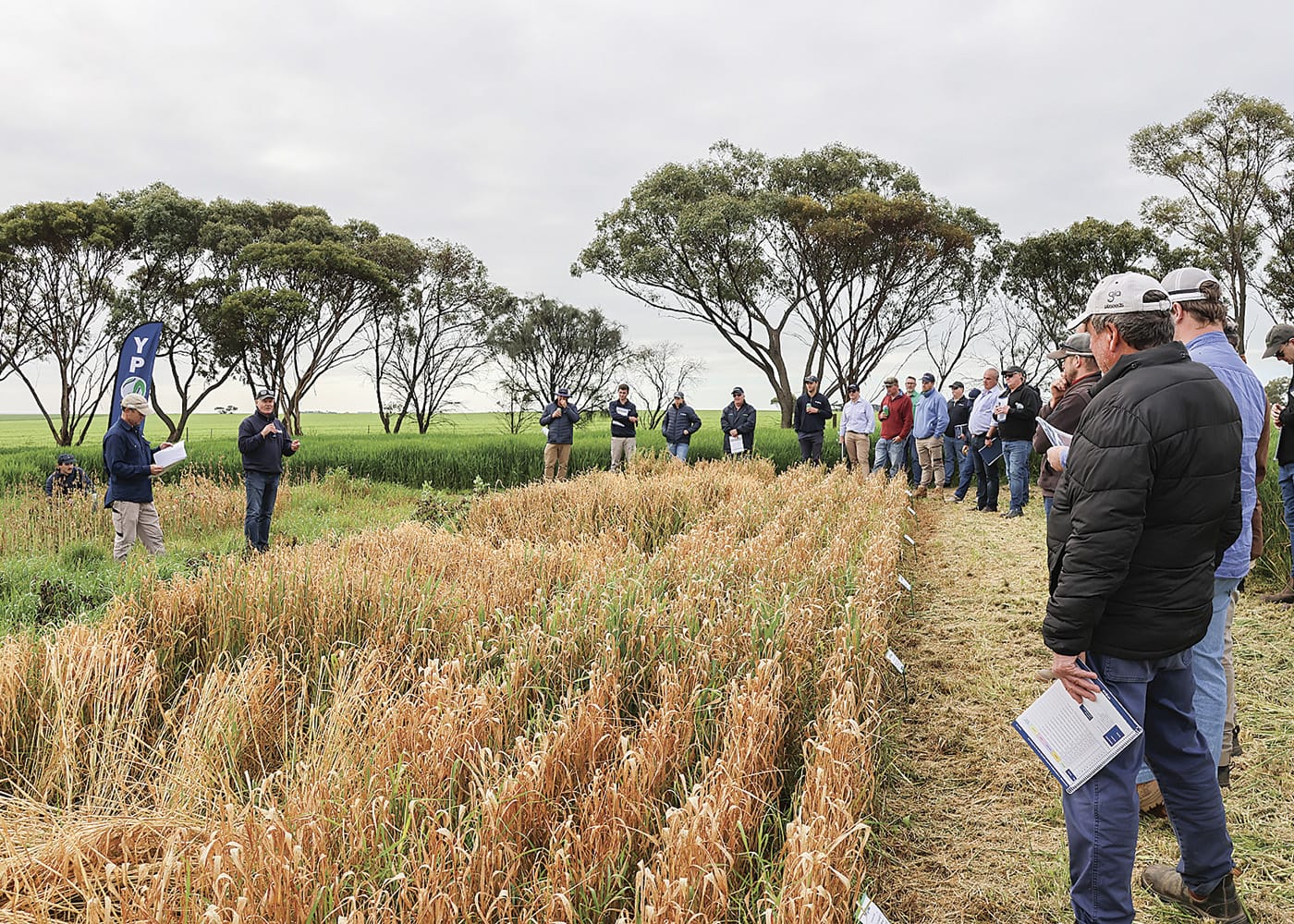
The first trial on the agenda focused on lentil disease management, presented by YP AG Kadina/Maitland agronomist Bri Schaefer.
She discussed the changes to lentil maximum residue limits for carbendazim in importing countries and how best to manage these changes.
She also spoke about some of the newer premium products available and where they fit in a fungicide program.
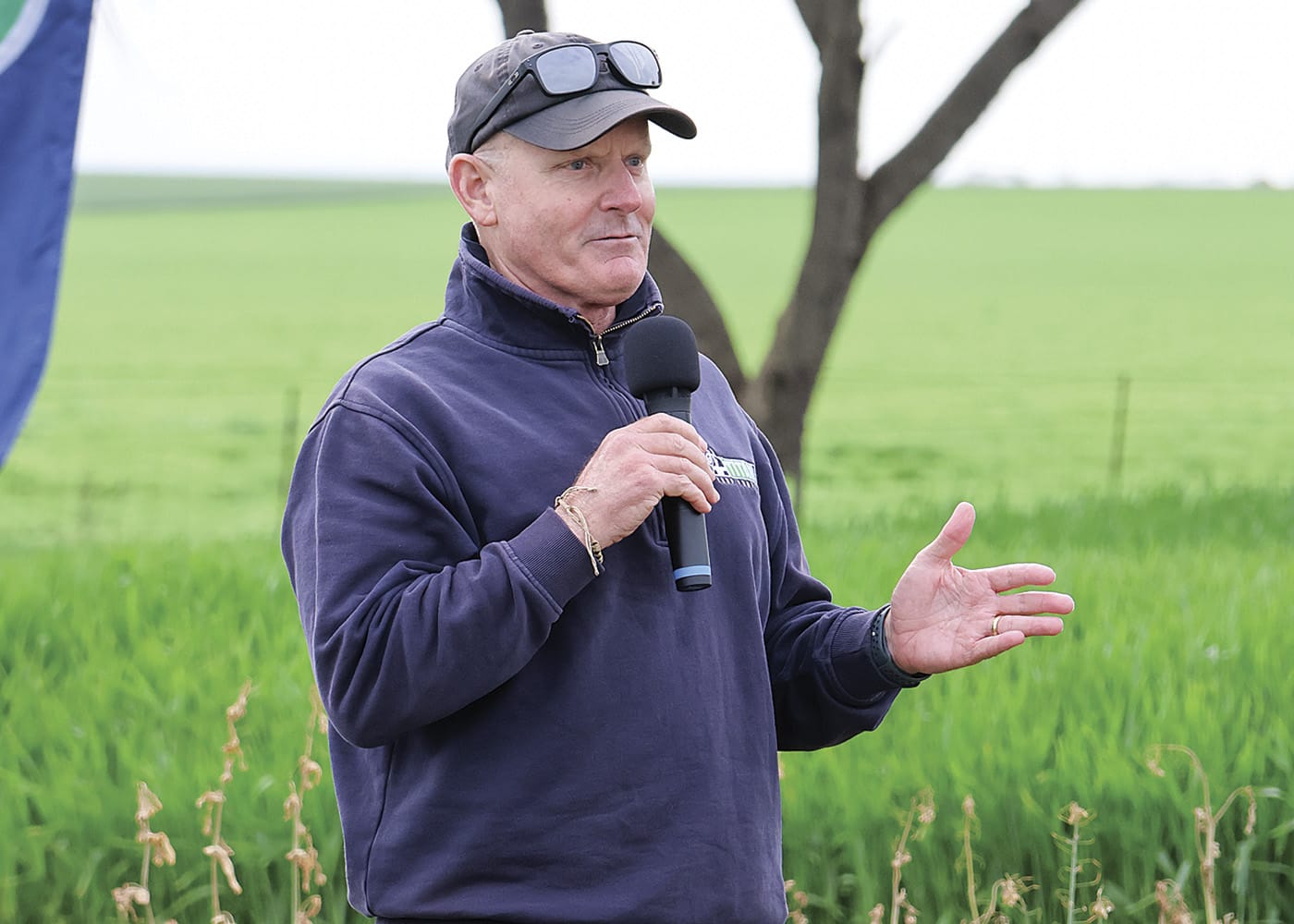
YP AG research agronomist Harrison Smith discussed the different options for managing net form net blotch in barley and how growers should move forward, given that triple-resistant strains have been identified in paddocks on Yorke Peninsula.
Curramulka-based YP AG agronomist Malcolm Johnson spoke about nitrogen management in barley and how plant growth regulators can be used to simplify nitrogen management decisions.
He explained the plant-height differences between three varieties and the challenges associated with pushing nitrogen rates to maximise yield potential.
Elders chief agronomist Alex Greetham was invited to share his experiences using PGRs and managing lodging in high-yield-potential barley crops in the United Kingdom.
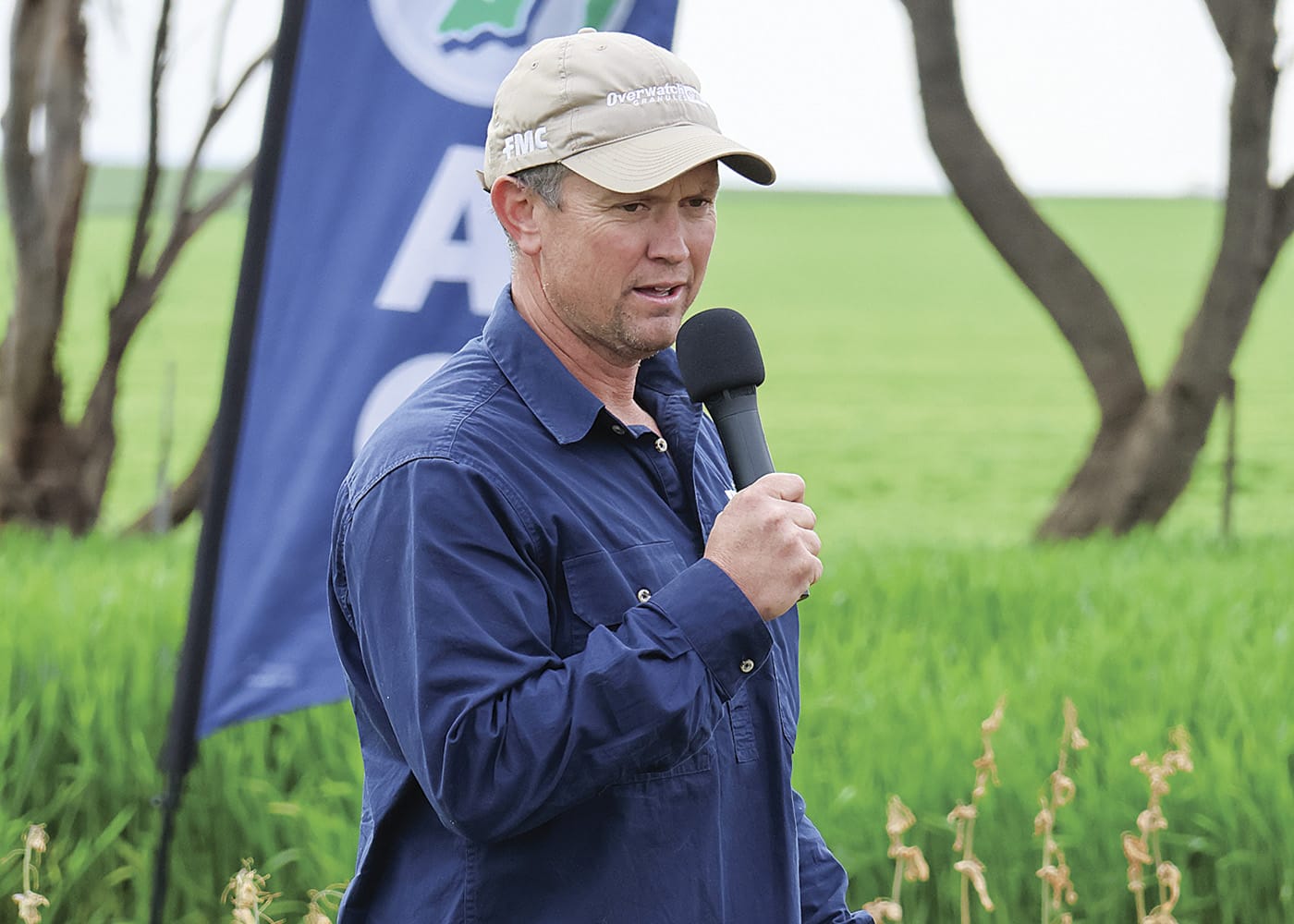
Before lunch, YP AG Kadina agronomist Nat Lloyd discussed management options for controlling capeweed in Clearfield lentils, highlighting the value of pre-sowing knockdowns when an early seasonal break occurs and how challenging weed management has been in recent years without them.
Mr Lloyd also emphasised the importance of timely early post-emergent applications to target small weeds.
Over lunch, attendees heard from Pioneer South Australia Territory sales manager Paul Jenke, who spoke about the value of canola and where it fits in rotations on Yorke Peninsula.
Attendees then made their way to YP AG’s Maitland trial site, where Mr Goody thanked co-operators, the Moloney family, who have hosted the long-term trial site for more than
10 years.
The first speaker of the afternoon, YP AG Yorketown agronomist Troy Johnson, compared annual ryegrass control options in lentils and canola, highlighting how new glyphosate and glufosinate-tolerant canola varieties are helping address the growing issue of ryegrass resistance to group one herbicides.
PB Seeds commercial manager Janine Sounness provided a brief overview of the company’s newest pre-commercial lentil variety, highlighting its competitive yield potential and disease package.
Next, YP AG agronomy manager Darryn Schilling discussed the limited area of durum wheat grown in the region, primarily due to its susceptibility to crown rot infection and the lack of effective pre-emergent herbicide options.
He explained how the release of FMC’s Overwatch for weed control and Syngenta’s Victrato, a seed dressing for crown rot and root lesion nematode suppression, could encourage more durum wheat to return to local rotations.
The final speaker of the day, YP AG Maitland agronomist Dom Meaney, invited a panel of presenters from various supplier companies to discuss their newly released and pre-commercial knockdown herbicides and where they may fit in farming systems now that the Australian Pesticides and Veterinary Medicines Authority has finalised its paraquat and diquat review.
YP AG prides itself on its research and development program, providing a strong point of difference, and clients are encouraged to provide feedback and trial ideas to ensure they continue to receive accurate, relevant and informative advice for their cropping programs.


