


ALGAL BLOOM SUMMER PLAN: Tackling SA’s algal bloom

PARTNER CONTENT
Journalist: Dani Brown
A HARMFUL algal bloom has been impacting large stretches of South Australia’s coastline since mid-March.
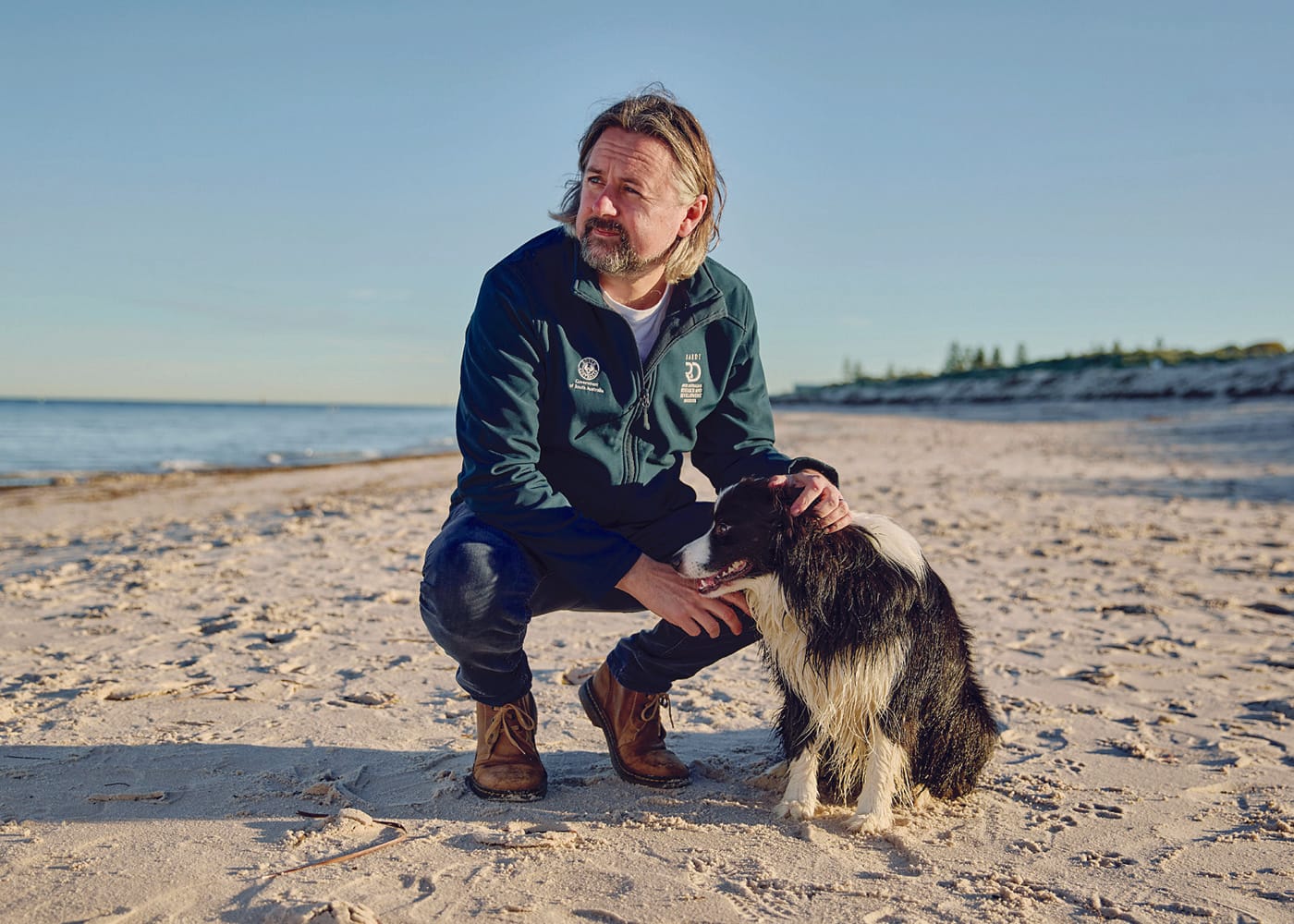
South Australian Research and Development Institute (SARDI) Executive Director Professor Mike Steer has shared insight into the work being done to understand and counteract the effects the algal bloom has had on the state’s marine life, and how people can get the latest information and updates on the situation.
Water monitoring and analysis
Routine water sampling is conducted across much of South Australia’s coastline, including the West Coast, Eyre Peninsula, Yorke Peninsula, Fleurieu Peninsula, Kangaroo Island, the Coorong, and the South East.
Researchers analyse the community in these samples, determining the different plankton they can see.
“We can identify the various phytoplankton, the dinoflagellates, the diatoms, and from that we can also get a count of the Karenia and work out how many cells per litre there are in samples from right across South Australia,” Prof Steer said.
“That gives us a really good indication of the extent and magnitude of the bloom and enables us to track it through time.”
SARDI is establishing a monitoring and surveillance system through a series of buoys that can detect algae - particularly Karenia - in the water and send information directly to scientists through satellites to give them an immediate, real-time alert, allowing them to be more prepared to respond.
The first tranche is set to be deployed by the end of the year.
Establishment of the Office for Algal Bloom Research
The Australian and South Australian Governments have committed funding for the Office for Algal Bloom Research, which will be a hub for expertise around understanding harmful algal blooms and to inform responses to future blooms.
The expertise they aim to build on includes oceanography, climate modelling, phytoplankton identification, offshore
monitoring equipment maintenance, and technical expertise in data capture.
“We’ve identified areas of expertise that we, as a state, would like to invest in and build on,” Prof Steer said.
“The expectation is that we would nest that capability within SARDI and then retain that expertise to develop new projects and scientific initiatives that help support our understanding and preparedness of harmful algal blooms in the future.”
Projects to restore reefs and seagrasses
Prof Steer said there were a number of marine ecosystem restoration initiatives being invested in.
A large-scale shellfish reef restoration involves building new limestone reefs to promote native shellfish reefs along SA’s coast, along with community shellfish restoration projects that use recycled oyster shells to create structures for native oysters to settle on.
Research is underway on seagrass restoration, including replanting seagrass meadows.
He said focusing on shellfish and seagrass was important because “they provide a natural filter of the water which is great in terms of intercepting excess nutrients and support bacteria that naturally limit algal growth, improving overall water quality”.
Shellfish feed on algae, while seagrasses intercept various nutrients and allow for epiphytic growth to create habitat for other microorganisms, natural viruses, and bacteria that can combat harmful algae, improving overall water quality.
Fish stocking and breeding of threatened and vulnerable marine species
King George Whiting and Snapper are two key species being reared in captivity to replenish depleted stocks in the Gulf St Vincent and Spencer Gulf.
Researchers are also working on rebuilding the populations of seadragons and seahorses.
“We know these dead fish make up a large portion of those found on our shores, and they’ve clearly been affected,” Prof Steer said.
“We’re now researching ways to help restock or support recovery of those iconic species.
Algal bloom hotline
Launched at the start of October, the algal bloom hotline is designed to be a one-stop shop for anyone with questions related to the algal bloom.
Reporting fish and marine animal deaths, the latest health advice, updates on the current algal bloom situation, fishing limits, grants and support packages and much more can all be learned through the hotline.
The free hotline can be called on 1800 774 779.
“Anything related to the algal bloom, they can jump in, and they’ll get directed to the appropriate area to answer their questions,” Prof Steer said.
The hotline complements the algal bloom website, www.algalbloom.sa.gov.au
Reporting fish kills and dead marine life
It is important for researchers to stay abreast of marine deaths not just to be aware of what is happening with the algal bloom, but also to make sure there are no other threats to the state’s biosecurity.
Prof Steer urged anyone who encountered any quantities of dead marine species to report it by calling the algal bloom hotline on 1800 774 779.
“A report activates a response, so it means that government officials will log it, and then if it’s deemed significant, then they send officers down to the beach to collect samples and also activate a cleanup,” he said.
“We still need to maintain an eye on other biosecurity threats, so even though we’ve got a harmful algal bloom that’s most likely having the greatest impact at the moment, we also need to ensure there’s nothing else on our doorstep that we need to consider.
“So when this algal bloom disappears, we would still encourage people to report any quantities of dead fish or sea life.”
Importance of citizen science
Prof Steer said the community’s early interest and engagement with reporting the algal bloom resulted in a wealth of data and information for researchers to access.
“Right at the beginning of this bloom in March, when it happened around the Fleurieu, there was an army of citizen scientists that galvanised into action and started reporting, or at least logging, the fish that were washing up along the beach,” he said.
“That’s been an incredible database for many to go back and analyse to get an understanding of the impact - not only when and where these species are washing up, but what sort of species are turning up, their size and composition, and the quantity.
“It’s really important for us to get an indication of the impact of the bloom - bearing in mind, it’s only the species that we’re seeing washing ashore; there’s likely to be a lot of other fish unaccounted for below the surface.”


